Activism Without Action is Silence
Reflections on Social Media & Activism re: Palestine

31 days. This has been an incredibly dystopian & heart-wrenching month. The lack of conversation regarding the ongoing Palestinian genocide outside of social media has been deafening.
The unfortunate reality is that our capitalist society does not stop for anything, even genocide, and we are left to continue going through the motions of our daily lives with heavy hearts and no time to process our own grief.
I am not Palestinian, my experience is not important in this context, and I am sure many of the opinions I will share here have been voiced much more eloquently by others on social media. However, I do think it is important to spend time reflecting on the ways in which you have failed to advocate for causes you believe in up until this point, and to learn how you can begin to do so and sustain that momentum moving forward.
I keep getting flashbacks to the first time I learned about Palestine in my 11th grade global studies class. Our teacher played us a documentary about life in Gaza under occupation, but that was the extent to which the topic was covered in school. Back then, I didn’t have the foresight or drive to research topics like that in-depth outside of what our teachers provided for us. Looking back, I regret that.
Now as a public health graduate student, I have a very tangible opportunity to apply every piece of knowledge I am learning to the current situation in Palestine. By shaping my perception of the Israeli occupation through a health equity lens and recognizing the ways in which I can take action and advocate for Palestinians, I am reminded of why I chose to pursue this career path.
This week in class my professor, Dr. Sophie Godley, centered our discussion on strategies to mobilize communities to take action when faced with large-scale issues. She emphasized the importance of individuals and communities who are beacons of strength and resilience during difficult times, who then inspire others to take action. This leads to a “Diffusion of Innovations” and better health outcomes for more people. As public health professionals, it is our job to find those people who embody the values of strength, resilience, and hope, and empower them.
I immediately began applying this theory to the humanitarian crisis in Gaza. Rather than regurgitating the noise from misleading Western news networks, we need to amplify Palestinian journalists’ voices to understand first-hand what is occurring in the Gaza Strip and to memorialize the stories of Palestinian people and their homeland. Journalists like Plestia Alaqad, Motaz Azaiza, Bisan, Hind Khoudary, and several others are sources of courage and hope for their communities and beyond. These heroes are not only experiencing a genocide against their people and culture, but are also continually risking their lives to clearly verbalize what is happening in real-time despite their own irrevocable trauma.
A post I read online pointed out how important it is to recognize that these Palestinian journalists are posting content in English and not their native language. They are actively choosing to create media that is readily accessible to the majority of the Western world, essentially spoon feeding us what we need to know about their situation, in order for us to empathize with their experiences and advocate for a ceasefire and humanitarian aid.
If this past month has taught me anything, it is that you do not need to be Palestinian to care about Palestinian liberation. You do not need to be a public health or medical professional to speak up against human rights injustices and health inequities. Most of us grew up using social media. Your screen time is probably so embarrassingly high you can’t even admit it to yourself. That being said, even if you only have 10 followers, that is an audience that you have the ability to influence and spread information to. Many people might argue that performative activism is unethical, which is a valid point and also why it is important to do your own independent work to learn about social justice issues that you feel uninformed about. At the same time, social media is our most valuable and accessible tool. Given the state of our world, and knowing that our country and tax dollars are actively funding the ethnic cleansing of Palestinians, how are you not so enraged that you want to use every tool at your disposal to make a difference?
Song recc:
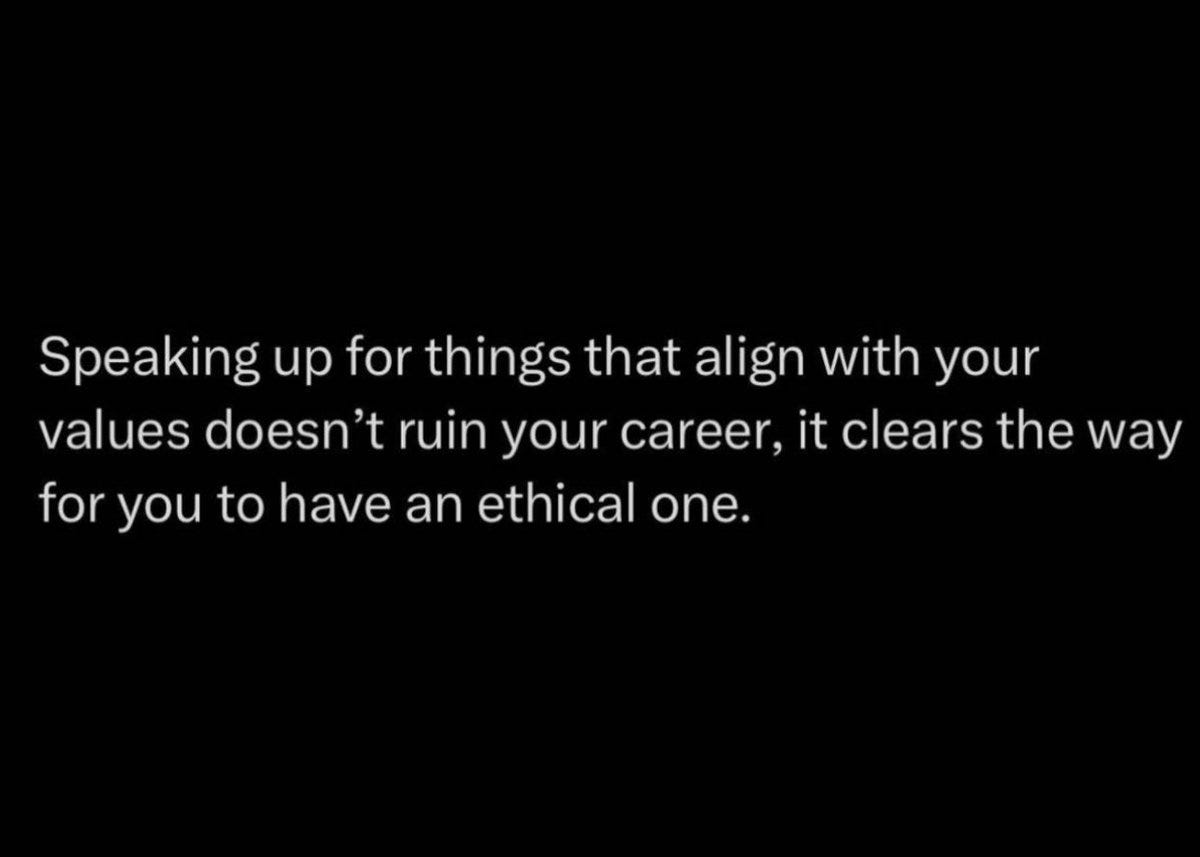
A post that inspires me:
Palestinian artists: https://www.instagram.com/palestinianartists/?hl=en
Some educational resources (non-comprehensive):
Public Health 4 Palestine- add your signature: https://linktr.ee/pubh4palestine
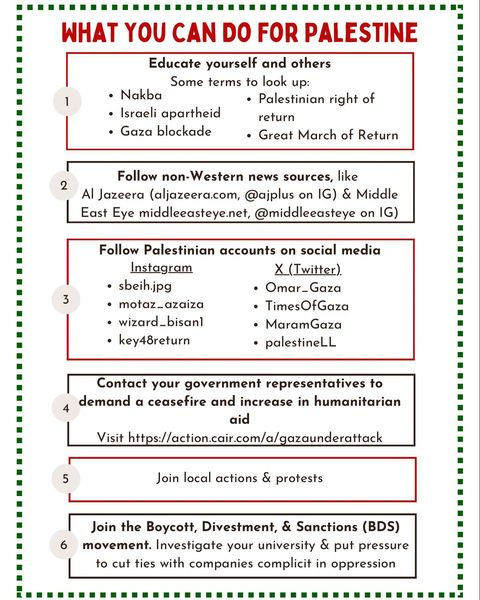
What you can do:
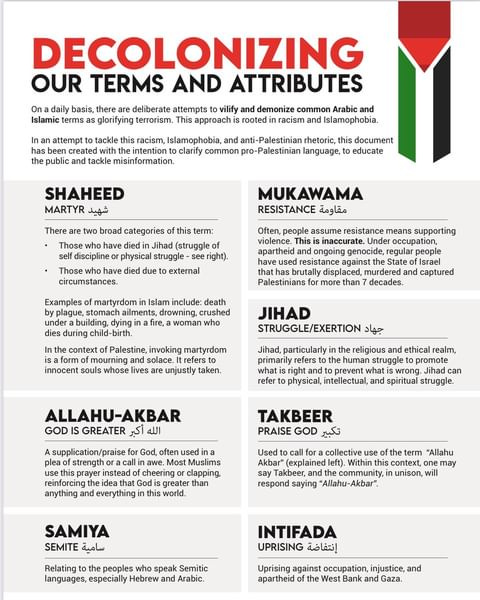
Decolonizing terms & attributes: